A well pump usually stops working for one of a few reasons: it lost power (a tripped breaker or a surge), a control part failed (the pressure switch, capacitor or control box), the pressure tank lost its air charge, or the pump itself is worn out or clogged with sand and sediment. Many of these problems are repairable without replacing the pump. Replacement makes more sense when the motor has failed, the pump is old and has needed repeated repairs, or it no longer fits your home’s water needs.
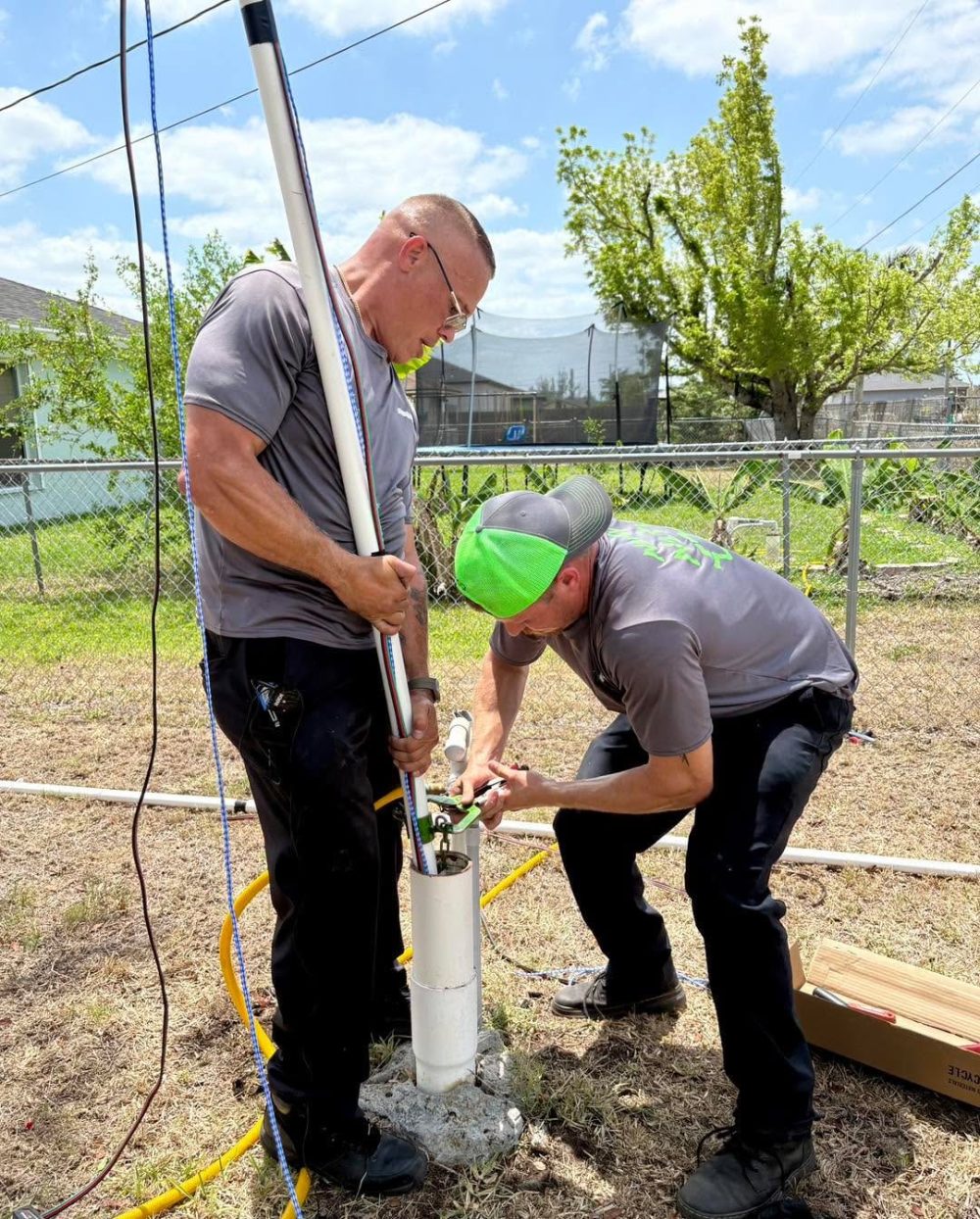
Below, we walk through the warning signs, the common causes in Southwest Florida homes, what you can safely check yourself, and how to decide between repair and replacement.
Is it safe to check my well pump myself?
You can safely check the breaker and look at the pressure gauge, but stop if you see or smell anything electrical. Well pumps run on high-voltage power, and the pressure switch often sits outdoors near water.
- If you see sparking, smell burning, or find standing water around the pressure switch, control box or wiring, do not touch anything. Stay away from the equipment, keep others away, and call 911 if there is smoke or fire.
- Only once the area is safe should you call a licensed professional.
How do I know my well pump is failing?
The most common sign is a change in your water: weak pressure, sputtering, or no water at all. Other signs often show up before a complete failure.
- No water at any faucet.
- Low or fluctuating pressure, especially when two fixtures run at once.
- Air spitting from faucets.
- The pump turns on and off rapidly (called short cycling), often heard as clicking at the pressure switch.
- The pump runs nonstop and never shuts off.
- Sand, grit or cloudy water coming through fixtures.
- A higher electric bill with no other explanation.
- A breaker that keeps tripping on the well circuit.
Why did my well pump stop working?
Most well pump failures trace back to power, controls, the pressure tank, or the pump and well itself. Here are the causes we see most often in Southwest Florida.
Tripped breaker or power surge
Summer thunderstorms and lightning are a frequent cause of sudden pump failure here. A surge can trip the breaker, burn out the pressure switch, or damage the capacitor or the pump motor. Power outages during hurricane season can also leave a pump that does not restart cleanly.
Failed pressure switch
The pressure switch tells the pump when to turn on and off. Its contacts can burn or pit over time, and in Florida, ants and other insects often crawl inside and jam the contacts. Salt air near the coast also speeds up corrosion on switches and wiring.
Waterlogged pressure tank
Your pressure tank holds a cushion of air that keeps the pump from starting every time you open a tap. When that air charge is lost or the internal bladder fails, the pump short cycles, which wears out the motor and switch quickly.
Bad capacitor or control box
Many pumps rely on a capacitor or control box to start the motor. When it fails, you may hear a hum with no water, or the pump may trip the breaker when it tries to start.
Sediment, sand and mineral buildup
Southwest Florida well water is often hard and can carry iron, sand and sediment. Over time this wears pump parts, clogs intake screens and coats check valves. Treating the water can protect the pump and your plumbing; our well water treatment page covers the options.
Low water level or a pipe problem
During the dry season, water tables can drop. If the water level falls near the pump intake, the pump can draw air or run dry, which overheats the motor. A cracked drop pipe, leaking fitting or failed check valve can also cause pressure loss and constant running.
A worn-out pump motor
Pumps that run constantly in our heat, short cycle for months, or handle gritty water simply wear out. A seized or burned-out motor usually means replacement.
What can I check before calling for service?
A few simple checks can sometimes get the water flowing again or help a technician find the problem faster.
- Check the breaker. If the well breaker is tripped, reset it once. If it trips again, leave it off and call a professional, since repeated resets can damage the motor.
- Look at the pressure gauge. Note whether the pressure is very low, dropping, or bouncing up and down.
- Listen at the pressure switch and tank. Rapid clicking points toward a tank or switch problem. Silence may point to power or the switch.
- Look for leaks. Check around the tank, wellhead and any exposed piping for water.
- Turn off the pump if it runs nonstop and no water is coming out, to prevent it from burning up.
Avoid opening the pressure switch cover or control box yourself. These parts carry live power even when the pump is not running.
Should I repair or replace my well pump?
Repair is usually the right call when a single component has failed and the pump is otherwise in good shape. Replacement is often the better choice when the motor itself has failed or the pump has a history of problems.
Repair often makes sense when:
- The problem is a pressure switch, capacitor, control box or wiring.
- The pressure tank has lost its air charge or needs replacing, but the pump runs well.
- A check valve or pipe fitting is leaking.
- The pump is fairly new and has been reliable.
Replacement often makes sense when:
- The motor is seized, burned out or drawing too much power.
- The pump has needed several repairs and keeps failing.
- Sand and sediment have badly worn the pump.
- The pump is undersized for your household, irrigation or a home addition.
- A submersible pump has to be pulled from the well anyway, so replacing an older pump at the same time avoids paying to pull it twice.
A technician can test the motor, controls and tank to tell you which parts have failed and give you clear options.
What affects the cost of well pump repair or replacement?
The cost depends on what failed and how much work it takes to reach it. Replacing a pressure switch at the tank is a very different job from pulling a submersible pump out of a deep well.
- The type of pump (submersible or above-ground jet pump).
- The depth of the well and how hard the pump is to access.
- Whether the pressure tank, switch or wiring also need work.
- The size and capacity of the replacement pump.
- Whether water treatment is needed to protect the new equipment.
The best way to know is to have the system diagnosed and ask for a quote. You can learn more about our water well services.
How can Southwest Florida homeowners prevent well pump problems?
Protecting the pump from surges, insects and short cycling goes a long way. Ask about surge protection for the well circuit, keep the pressure switch cover sealed against insects, and have the pressure tank checked periodically.
If you are a seasonal resident, have the well system checked before you leave and after you return. Pumps and switches that sit idle through a humid summer can corrode or collect insects. After a hurricane or flooding near the wellhead, have the system inspected and the water tested before drinking it.
Frequently asked questions
Why does my well pump keep turning on and off?
Rapid on-and-off cycling usually means the pressure tank has lost its air charge or the pressure switch is failing. Have it fixed soon, because short cycling wears out the pump motor.
Can a well pump be repaired instead of replaced?
Yes. Many failures come from the pressure switch, capacitor, control box or tank, and those parts can be replaced without a new pump.
Why do I have no water after a storm?
A power surge or outage may have tripped the breaker or damaged the pressure switch or motor. Reset the breaker once, and if the pump still does not run, call a professional.
Is it an emergency if my well pump stops working?
Having no water is urgent for most households, especially in our heat. If there is any sparking, burning smell or water near the electrical parts, get away from the equipment first and call 911 if needed.
When to call a professional
If your well pump has no power, keeps tripping the breaker, short cycles, runs nonstop or delivers sandy water, it is time for a licensed plumber. Plumbing, Cooling & Electrical Nerds serves Naples, Fort Myers, Cape Coral, Bonita Springs, Estero, Lehigh Acres, Marco Island and the rest of Southwest Florida, including well pump repair in Fort Myers. We are open 24/7; call (239) 215-3330.